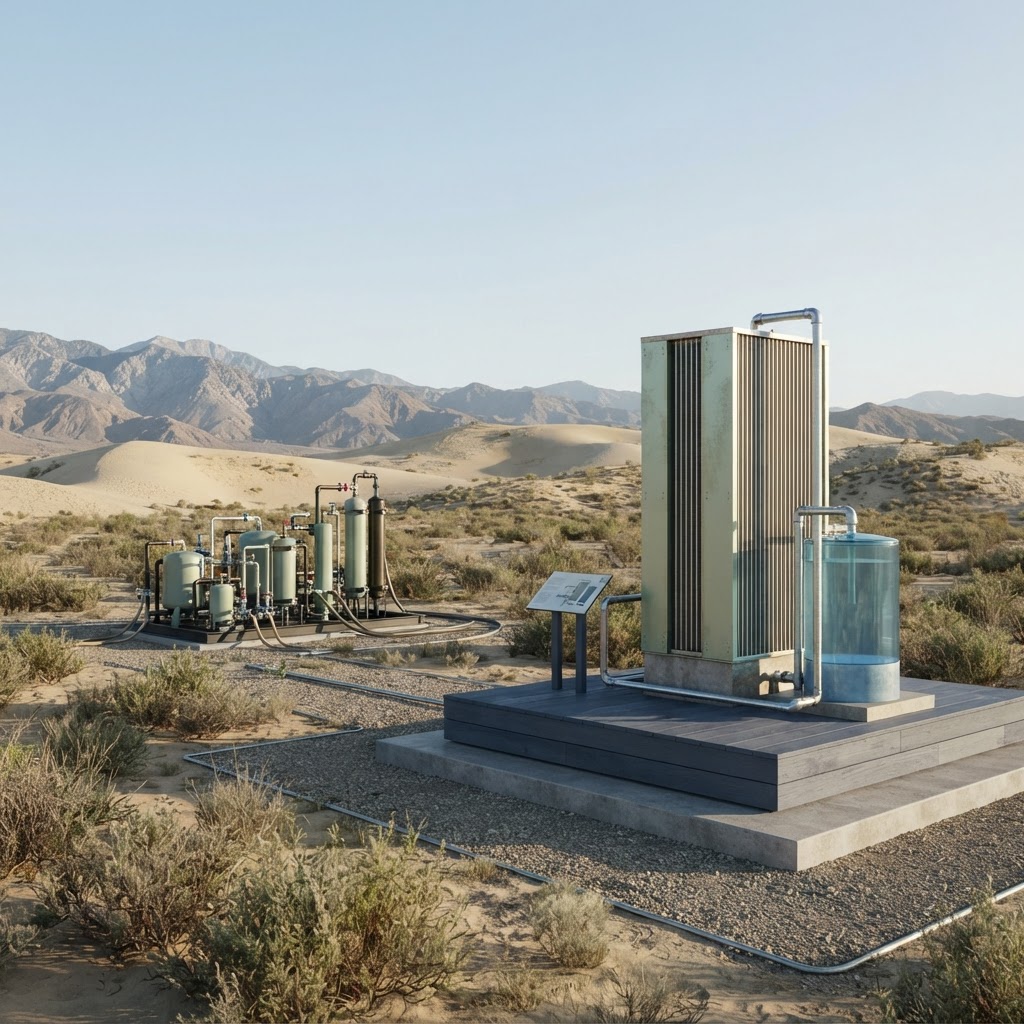
COMPLETED · 2017
Humanitarian Project
Completed in 2017, the one-hectare Berbera pilot tested a lower-cost approach to growing vegetables in coastal Somaliland: shade-net structures cooled by seawater, with on-site desalination for irrigation.
The Story So Far
Proven physics. A new context. An unproven application. Here's how we get from thirty years of greenhouse innovation to testing whether the same cooling can save water in open American fields.
ACT IThe cooling physics is proven
Decades of Seawater Greenhouse projects show that saline water can cool protected crops in dry climates. E2Eden is building on that work to ask a different question: how much net freshwater can the same principle save in open or semi-open fields?

COMPLETED · 2017
Completed in 2017, the one-hectare Berbera pilot tested a lower-cost approach to growing vegetables in coastal Somaliland: shade-net structures cooled by seawater, with on-site desalination for irrigation.

COMPLETED · 2010
A 2,000 m² pilot opened near Port Augusta in 2010. Sundrop Farms later developed a separate 20-hectare commercial greenhouse complex, completed in 2016, using seawater from Spencer Gulf and a concentrated solar thermal system.

COMPLETED · 2004
Completed in 2004 at Al-Hail near Muscat, the third Seawater Greenhouse pilot brought the company and Sultan Qaboos University together to study crop cooling and freshwater recovery in Oman.

COMPLETED · 2000
Installed in 2000 on Al-Aryam Island, Abu Dhabi, the second Seawater Greenhouse pilot tested evaporative cooling and freshwater recovery under much hotter conditions than in Tenerife.

COMPLETED · 1994
Installed in 1994, the first Seawater Greenhouse prototype in Tenerife tested whether seawater could cool a greenhouse, support vegetable crops and yield freshwater in an arid coastal setting.
ACT II · PHASES 1–3Proof of concept to commercial deployment
Three connected steps, each one earning the next: a small instrumented trial, an independently measured pilot, then a working commercial offer to growers.

PHASE 1 · PROOF OF CONCEPT
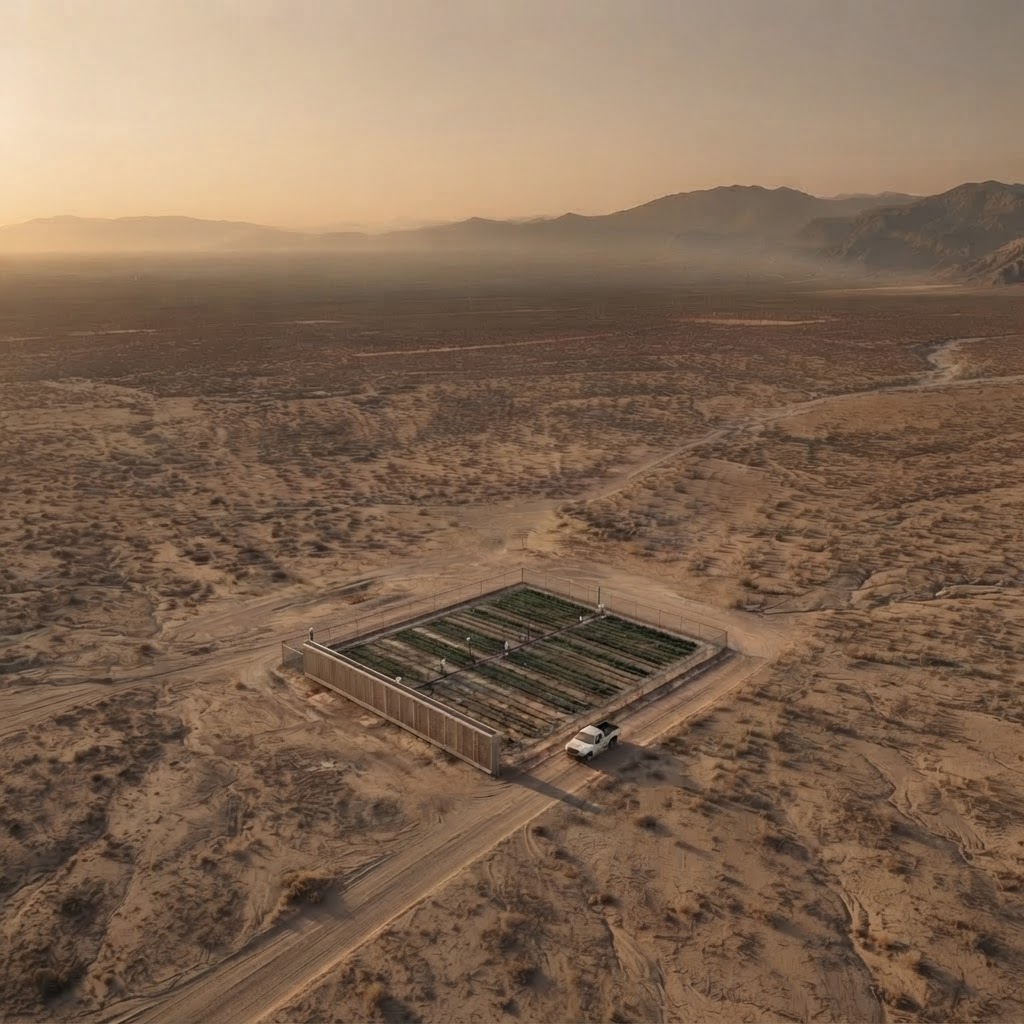
E2Eden is seeking grant support to test whether saline-water cooling walls can create a useful microclimate in desert fields and reduce net freshwater demand. The first deployment site is not fixed.

PHASE 2 · AT-SCALE PILOT
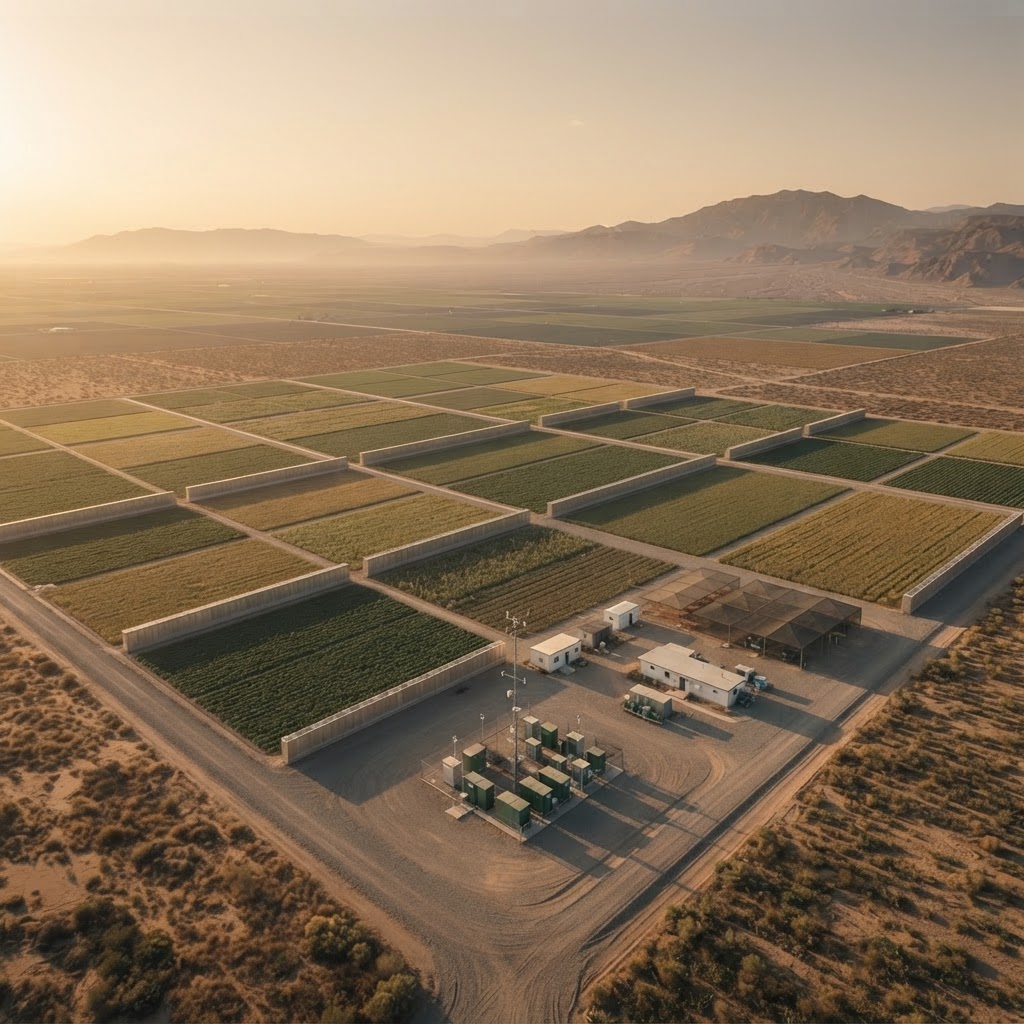
The proposed second-site pilot at UC Desert Research & Extension Center in Holtville would test saltwater cooling walls on crops and independently measure whether the freshwater savings and farm economics justify a larger rollout.

PHASE 3 · COMMERCIALIZATION
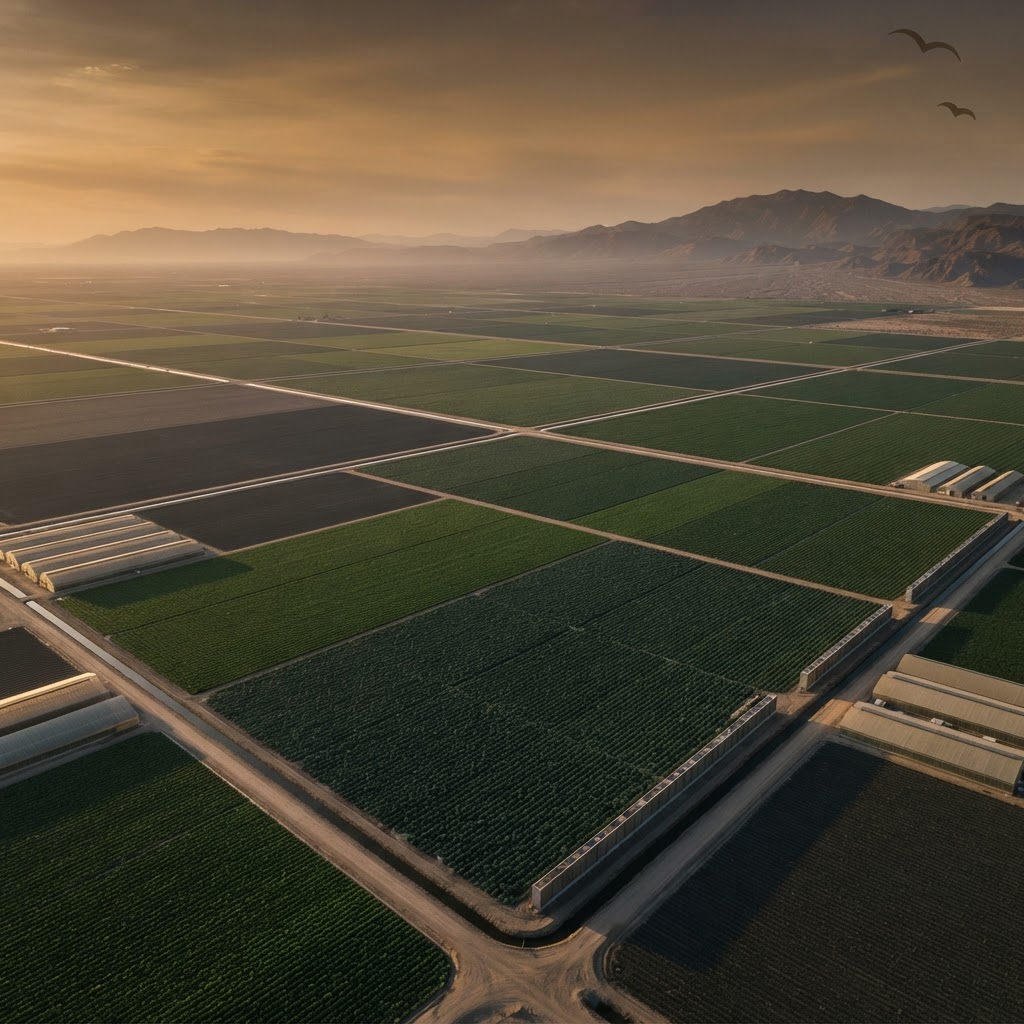
Sales would start with heat-sensitive specialty crops, where a longer growing window, better quality or an extra harvest could justify the investment. Larger-acreage field crops follow once the model works commercially and a conservation payment mechanism exists.
ACT IIIRegional terraforming & restoration
Act II proves one component. Act III asks whether the pieces can be combined into a water system for an entire region — ocean intake, conveyance tunnels, receiving works, farm cooling and salt management working as one. This is the most ambitious step in the roadmap: a terraforming and restoration concept that is neither approved nor yet economic. E2Eden’s 2023 proposal is where the idea is being examined.
Bring Pacific seawater to the Salton Sea at regional scale, then route lake brine inland to cool farms and manage the remaining salt. The import system is not a prerequisite for the earlier field trials or pilot.
The proposed system · E2Eden’s 2023 concept

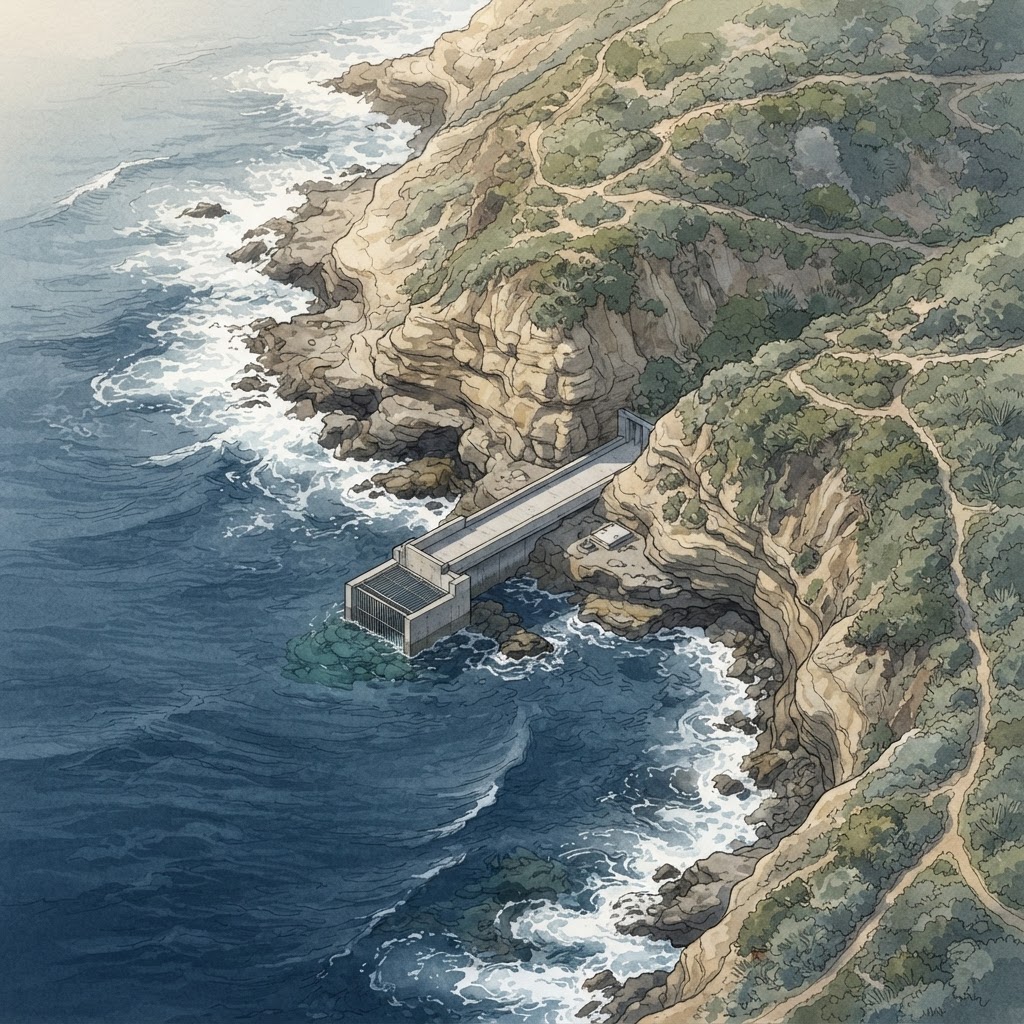
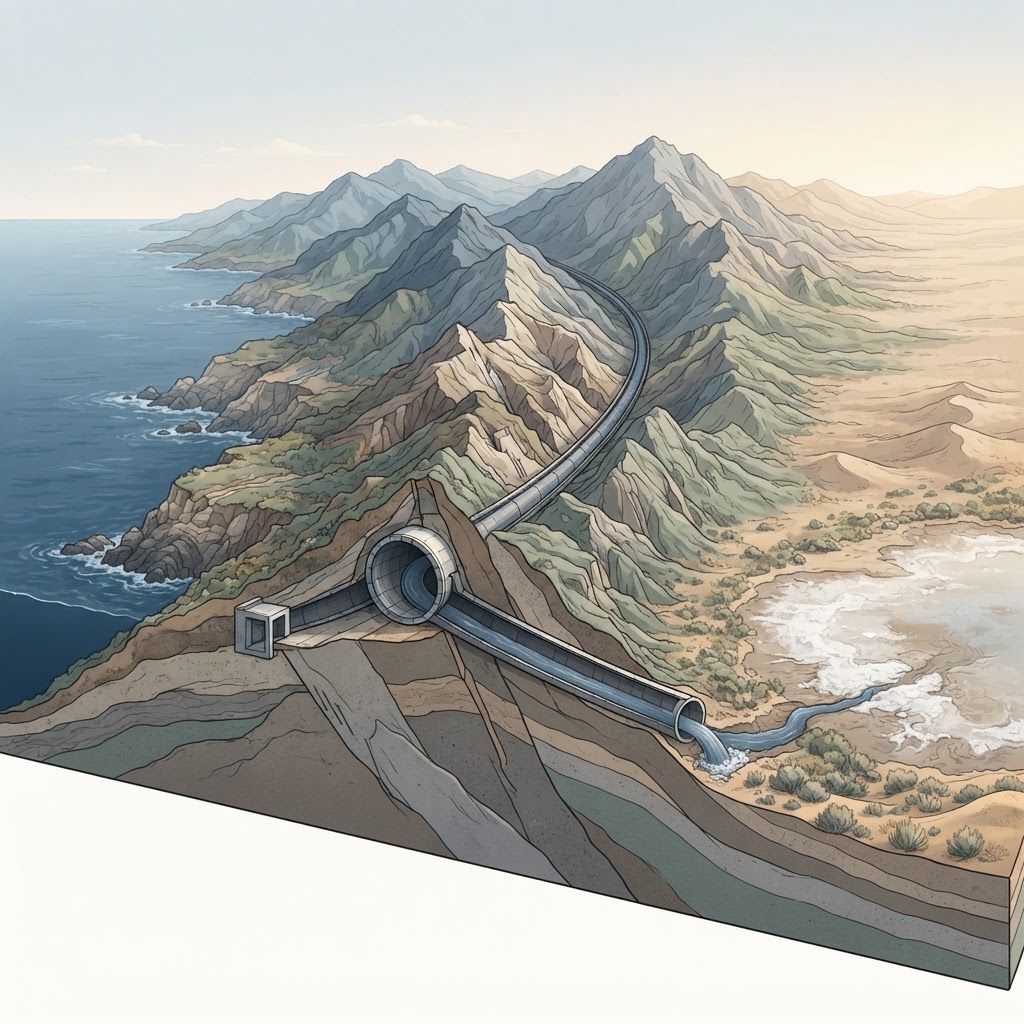
A coastal intake would bring seawater into the tunnel. Siting and design would need to address marine life protection, allowable withdrawal volumes, and coastal permits.

The proposal sketches a roughly 78-mile route with a 230-foot elevation drop to drive large-scale seawater import. The alignment and capacity are illustrative and would need geotechnical and hydraulic studies.

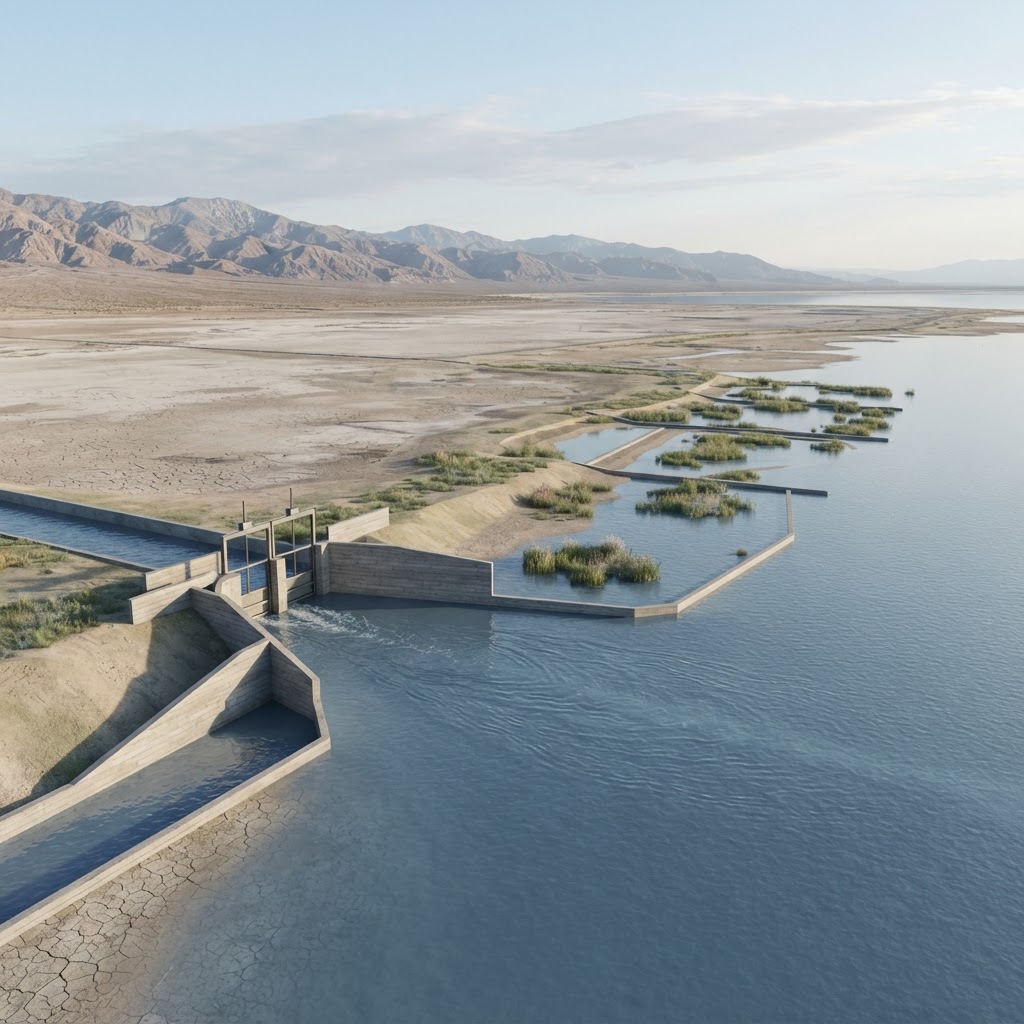
A controlled outlet and lake monitoring would help manage inflow, water level, and salinity. Shoreline habitat and dust mitigation would need to be designed and evaluated alongside the water and salt balance.

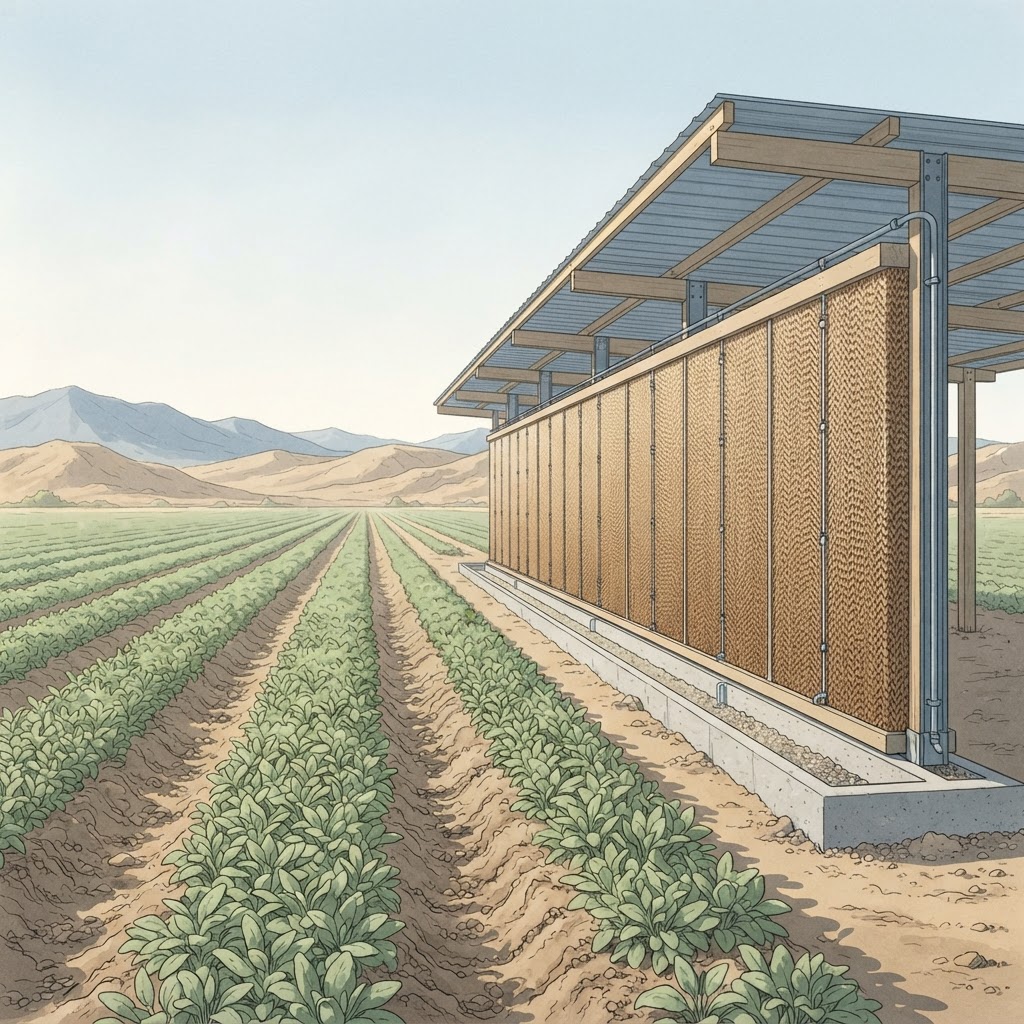
A separate network would carry lake brine to evaporative walls serving farms and greenhouses. The walls would cool the air without using brine for irrigation; net freshwater savings would need to be measured in the field.

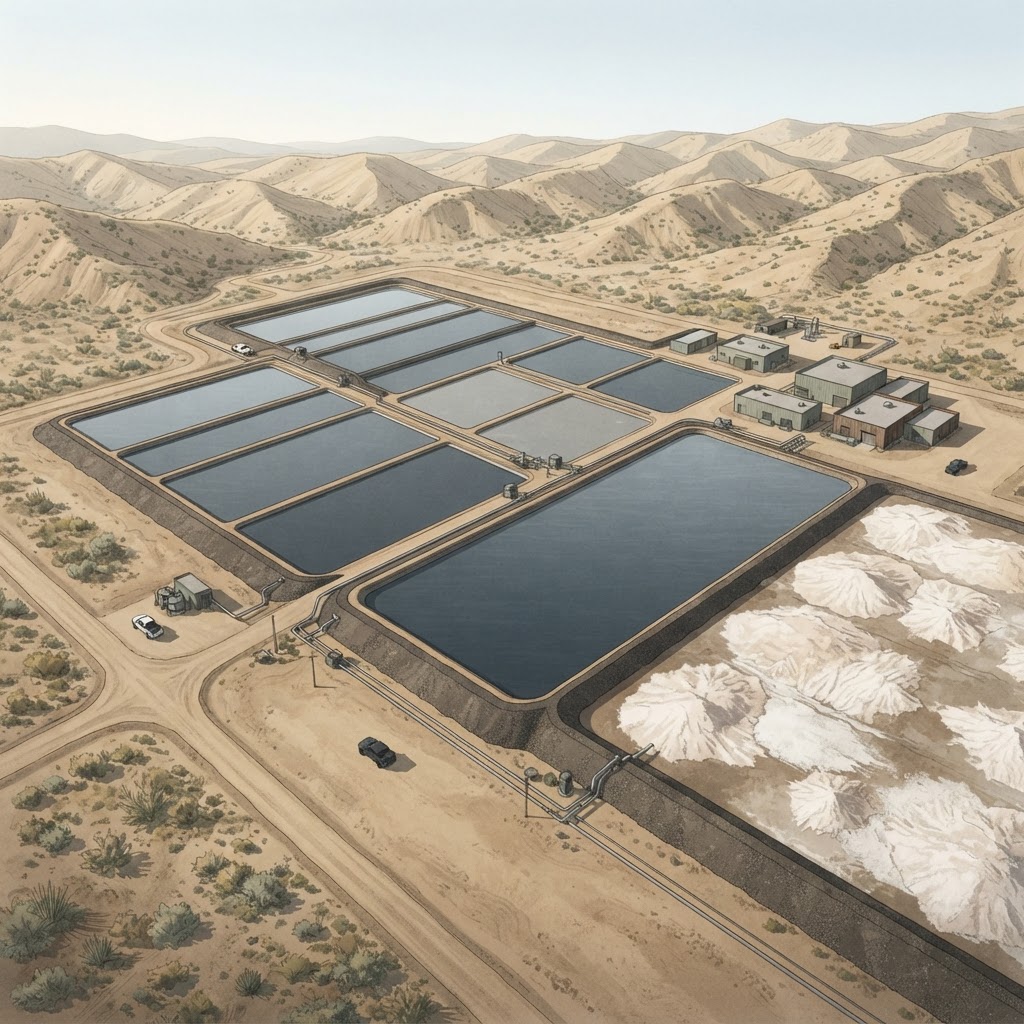
Evaporation concentrates salt; it doesn’t remove it from the basin. The revised concept would collect concentrated brine and provide for salt separation, storage, and permitted disposal or use rather than returning brine to the Pacific.

Condensers could recover some freshwater from humid air. Lithium recovery from suitable geothermal brines is a separate opportunity that would need its own testing and business case.
The 2022 independent review raised regulatory barriers to Pacific import and brine discharge under the earlier design. The revised concept is not approved; it would require feasibility studies, environmental review, engagement with Tribal nations and local communities, permits, and financing.
Explore the Salton Sea restoration conceptACT IVGoing global
If a regional system can be built and operated here, the same combination of technologies could be studied basin by basin elsewhere. Act IV is the long horizon: assembling the final systems into something that could be deployed worldwide, wherever water, ecology and local agreement make the case.
California, USA
The California starting point. As the lake shrinks, exposed lakebed can release dust and rising salinity puts habitat under pressure. Phase 3 asks whether farm cooling, seawater conveyance and inland salt management could work together here.
Regional concept · Brine management · Habitat
Jordan Rift Valley
Diversions reduced the Jordan River’s inflow, and the shoreline has receded. Past Red Sea and Mediterranean conveyance proposals show why water chemistry and cross-border coordination matter as much as engineering.
Receding lake · Water chemistry · Shared basin
Utah, USA
This shallow, closed basin depends on freshwater inflows and supports migratory birds. It poses a different question: could verified agricultural water savings help restore inflows under local water agreements, without importing seawater?
Freshwater inflow · Conservation · Bird habitat

South Australia
This inland salt lake naturally alternates between dry periods and floods that sustain bursts of wildlife. Historic ocean-import ideas are a starting point for study, not a restoration plan: permanent water could alter the ecosystem’s flood-and-dry cycle.
Ephemeral lake · Flood cycles · Concept only

Egypt
In Egypt’s Western Desert, this below-sea-level basin inspired proposals to bring in Mediterranean water and generate hydropower. Unlike the shrinking lakes, this is a basin-creation concept, with open questions about conveyance, salinity and ecological impacts.
Desert basin · Hydropower concept · Concept only
These are places to study, not committed projects. Each basin would need its own water and salt balance, ecological review, and local agreement. Explore the full Going Global vision.