

2nd Pilot Project
The second pilot seawater greenhouse installed in 2000 on Al-Aryam Island, Abu Dhabi. A lightweight steel structure covering 864 m², powered entirely by solar energy, producing ~1 m³ of fresh water per day — nearly meeting the full irrigation demand of the crops grown inside.
How It Began
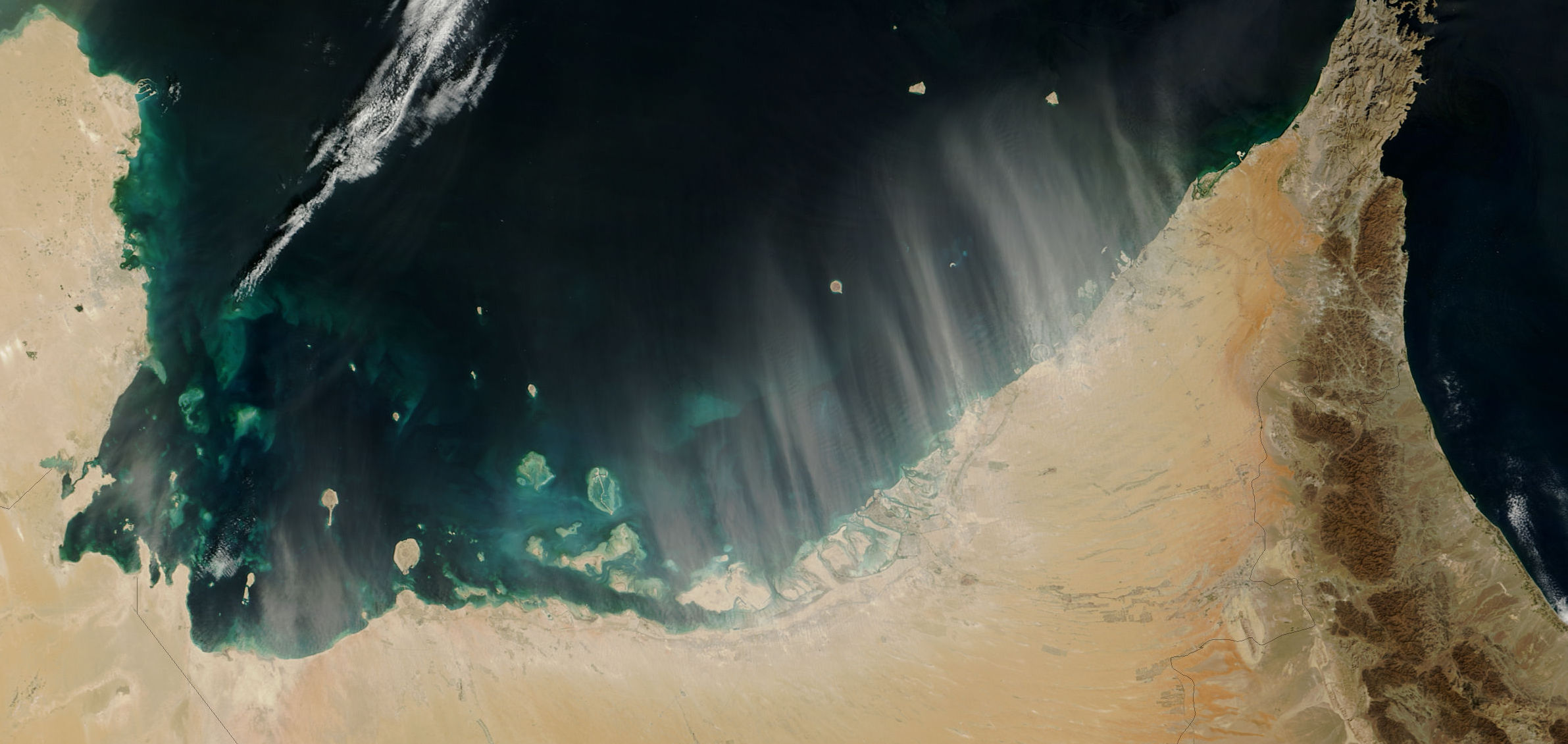
Building on the success in Tenerife, Seawater Greenhouse Ltd secured the opportunity to deploy their second prototype in the UAE in 2000. Al-Aryam Island on the Abu Dhabi coast provided an ideal setting: extreme heat, proximity to seawater, and strong institutional interest from UAE authorities in sustainable desert agriculture. The project advanced the design from the Tenerife prototype with a more refined pipe array system to increase freshwater production and further reduce internal temperatures.
Our Solution
The 864 m² greenhouse used a multi-span polytunnel steel structure with seawater-wetted evaporative panels on the windward face. A new pipe array system improved cooling efficiency compared to the Tenerife prototype. Running entirely on solar energy, the system produced approximately 1 m³ of desalinated fresh water per day through condensation — sufficient to nearly meet the irrigation needs of the crops cultivated inside, including tomatoes.
Project Updates
The Abu Dhabi project demonstrated that the technology scaled successfully beyond Tenerife's mild climate and could operate in one of the world's most extreme desert environments. It provided critical data that validated the thermodynamic simulation model now used to predict seawater greenhouse performance in new locations worldwide.
Gallery


Funding
UAE institutional support
Partners
Seawater Greenhouse Ltd